Pearl Architects Office
A studio that
thinks the way it looks.
The Pearl Architects office is a direct expression of the studio's design philosophy – minimal, functional, and light-filled.
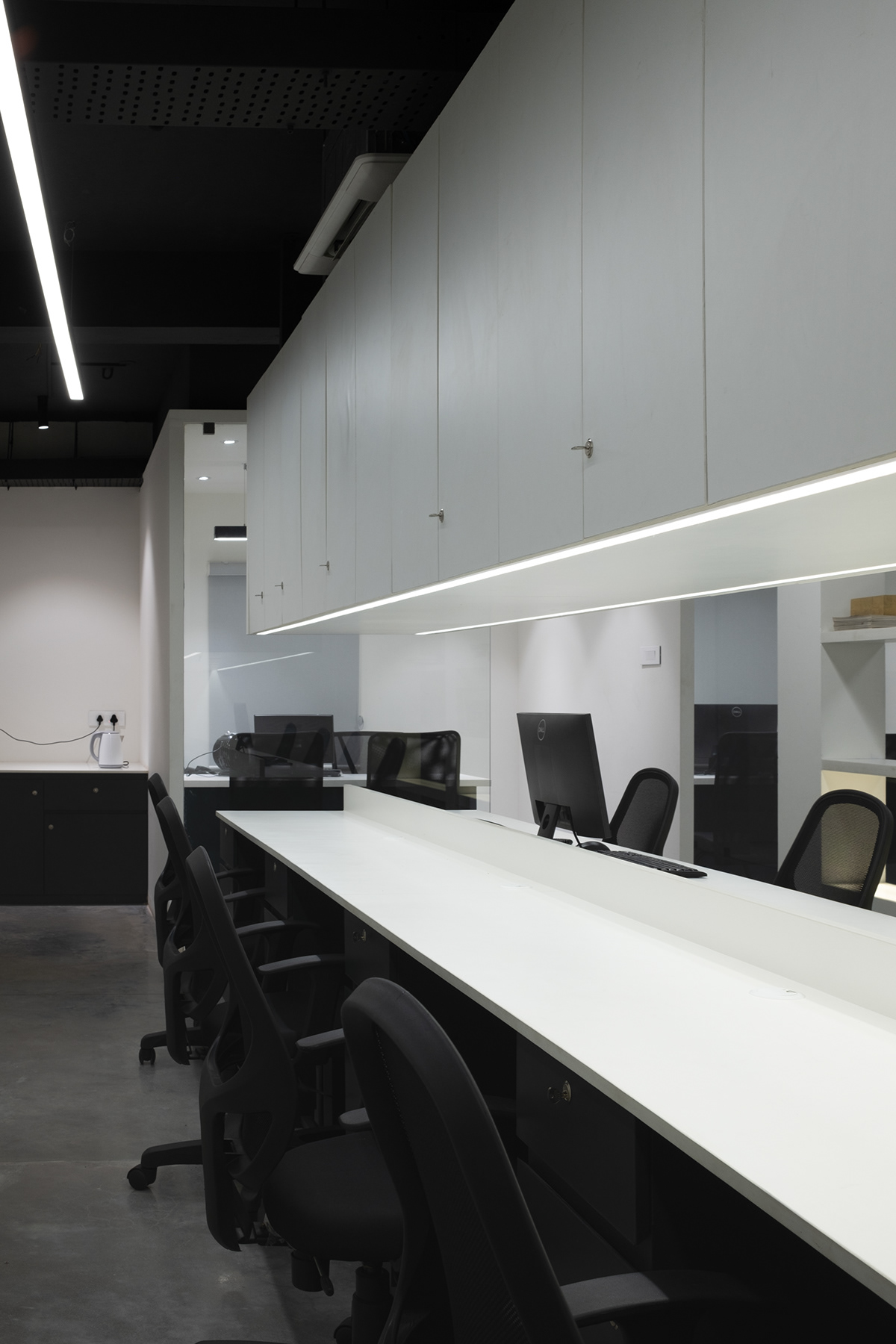
The 3,000 sq ft space in T. Nagar was designed around a single discipline: everything must earn its place. Open shelving, considered joinery, and a restrained material palette create a workspace that inspires without distraction.
Location
Chennai, Tamil Nadu
Project Type
Office Interior
Total Area
3,000 sq ft
Design Philosophy
Minimal & Sustainable
Duration
90 Days
Year
2021
Open shelving as an act of transparency.
Open shelving as an
act of transparency.
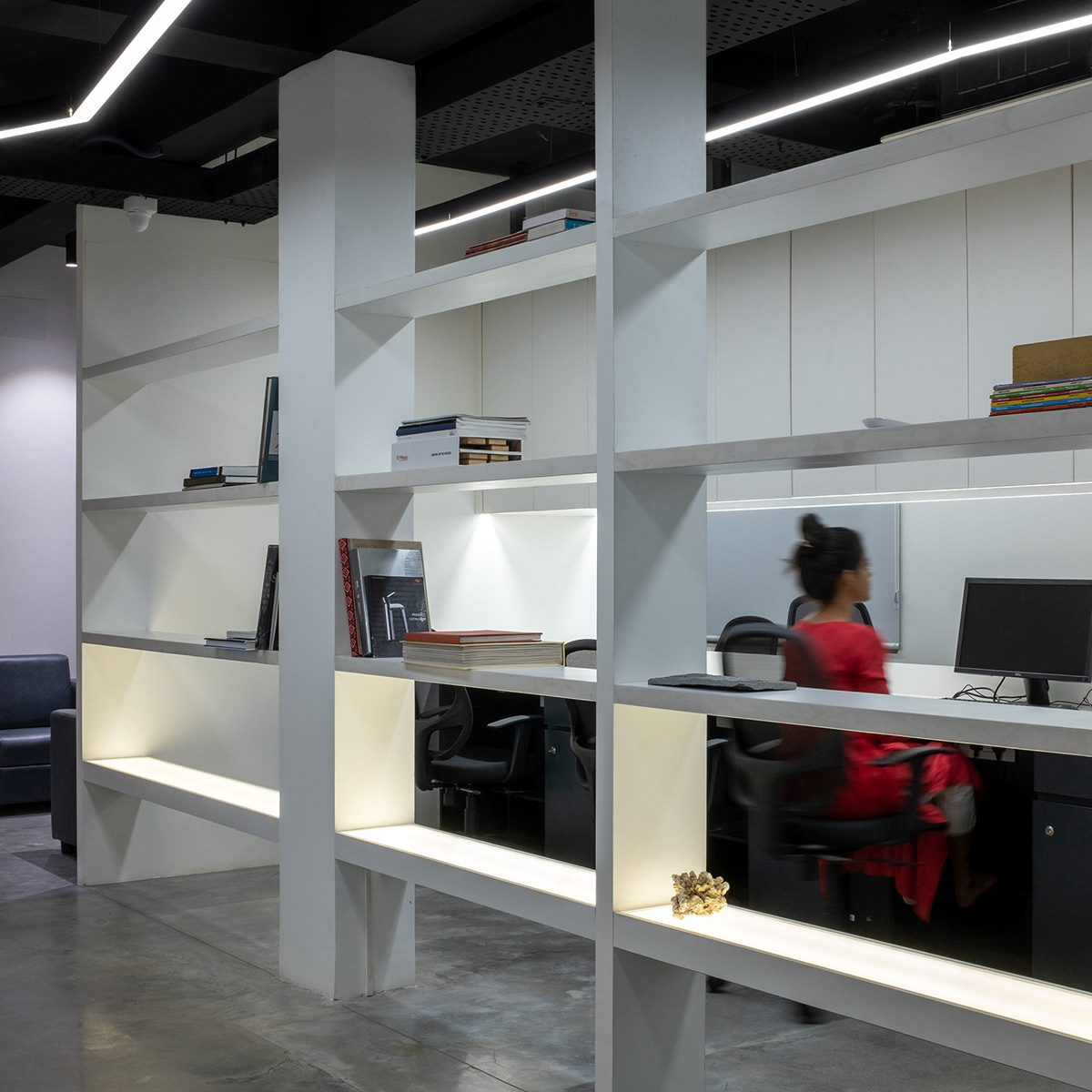
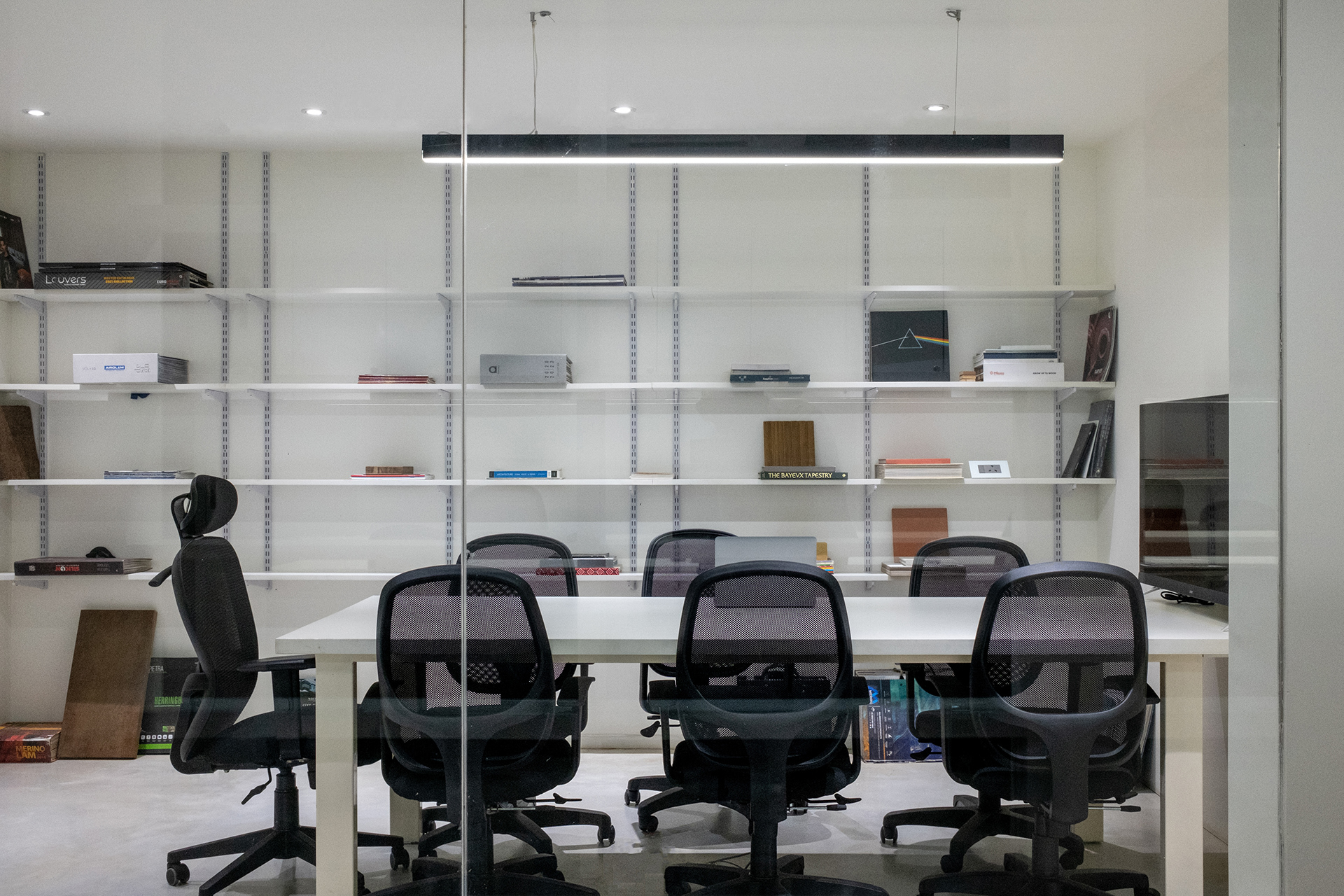
The floor-to-ceiling shelving system that defines the studio's main elevation is more than storage — it is a declaration. Every book, material sample, and model is displayed rather than concealed, creating a working archive that communicates the studio's accumulated knowledge.
The system was designed in-house, fabricated locally, and installed in a single continuous run. Its visual rhythm — the repeated vertical and horizontal members — provides the room with proportion and purpose without ornamentation.
Design Principle · Pearl Architects Office
The office is not a backdrop for work. It is a participant in it.
The plan as a diagram of
how we work.
The planning of the office began with a study of how a design studio actually operates — the need for focused individual work, collaborative sessions, client presentations, and material research happening simultaneously.
The floor plan resolves these as a loose sequence of zones rather than a series of closed rooms.

The section reveals what the
plan conceals.
The floor-to-ceiling shelving system that defines the studio's main elevation is more than storage — it is a declaration. Every book, material sample, and model is displayed rather than concealed, creating a working archive that communicates the studio's accumulated knowledge.
The system was designed in-house, fabricated locally, and installed in a single continuous run. Its visual rhythm — the repeated vertical and horizontal members — provides the room with proportion and purpose without ornamentation.